Sometimes helping doesn’t mean fixing.
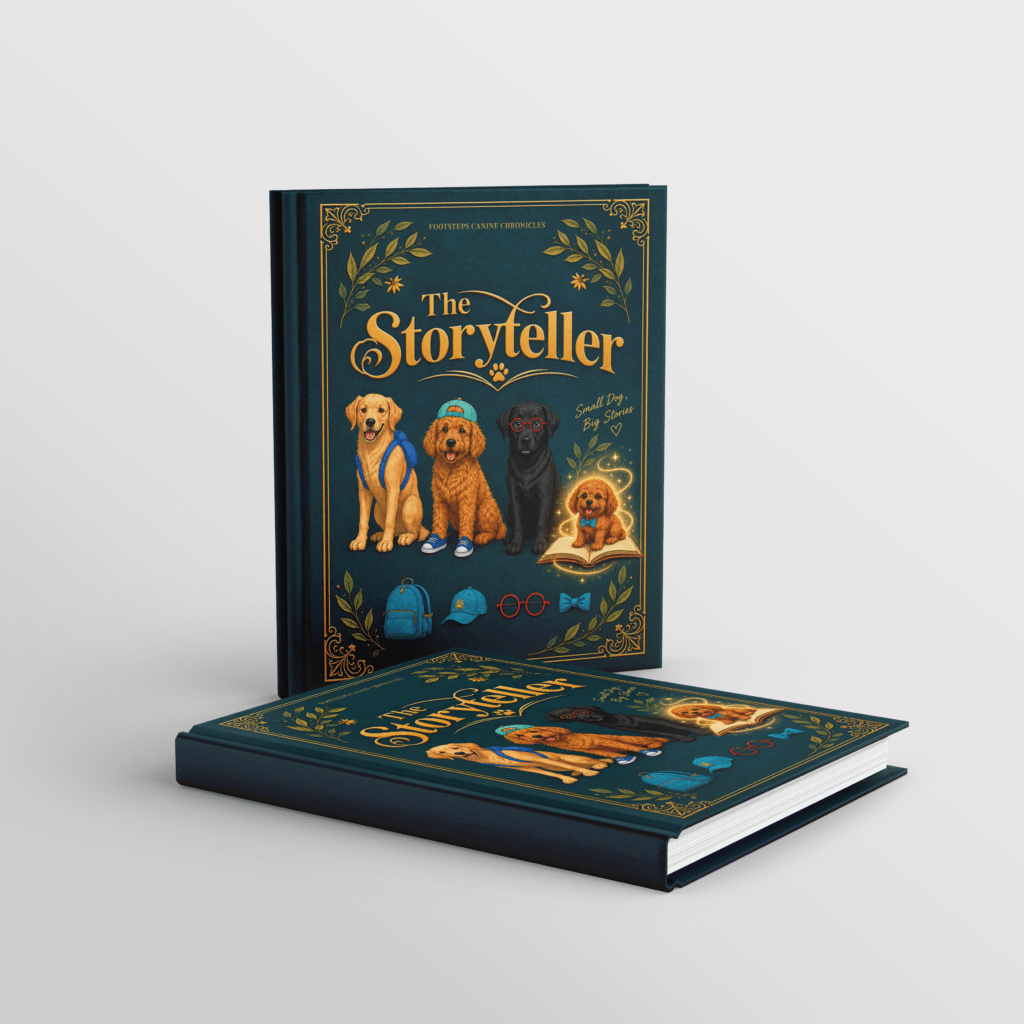
Meet Tyson, Paddy, Neville and Albus, four very different dogs discovering that understanding someone begins with curiosity.
Across twelve warm and thoughtful stories, they explore kindness, assumptions, loss, courage, mistakes, communication, growing at your own pace and what it truly means to support another person.
Written to connect with children while offering deeper meaning for teenagers and adults, The Storyteller invites families, teachers, carers and professionals to see beyond labels and behaviour and become curious about the person underneath.
A storybook about understanding others, and perhaps understanding ourselves a little better too.
Twelve stories, each opening a gentle conversation. Tap a chapter to read more.
This chapter introduces one of the central ideas of the book: helping does not always mean fixing. Through Paddy’s quiet response to a child who is struggling, and Tyson’s memory of the girl in the yellow gumboots, the chapter explores the importance of noticing before acting. The intent is to encourage children and adults alike to recognise that different people need different things at different times. Sometimes that may be practical help, sometimes play, sometimes space, and sometimes simply having someone remain nearby. The learning is to pay attention, avoid assumptions and respond to the person rather than automatically trying to change how they are feeling.
When Neville sees an opening beneath a fence, he quickly moves from what he can see to what he believes it means: the fence is broken, the opening is dangerous and therefore it must be fixed. Albus separates this thinking into observation, interpretation, prediction and decision. The intent is to demonstrate how easily assumptions can become “facts” in our minds, particularly when we believe we are helping. The learning is to separate what we actually know from what we think we know, remain curious and gather information before reaching conclusions, while recognising that genuine and immediate risks still require action.
This chapter explores the subtle difference between appreciating something and beginning to expect it. Something that was initially experienced as a gift can gradually feel like something we are entitled to receive simply because it has happened before. The intent is to encourage reflection on expectation, gratitude and ownership. The learning is that repeated kindness does not automatically create an obligation, and disappointment can sometimes tell us more about the expectations we have developed than about the person who has supposedly disappointed us.
When Albus discovers that something familiar and important to him has been damaged, the cracked bowl becomes a way of exploring loss, change, attachment and acceptance. Tyson does not dismiss Albus’s sadness simply because the bowl has little monetary value; something can matter because it has been part of our life. The intent is to show that accepting change does not require us to pretend we are happy about it. The learning is that we can grieve what has changed while eventually discovering that something different may still have meaning or purpose.
As Tyson grows older, he can no longer move at the same pace as the younger dogs. Rather than portraying ageing as either purely negative or something that must be positively reframed, the chapter explores adaptation, dignity and different ways of experiencing life. Tyson’s slower pace allows him to notice things the others might rush past, while the younger dogs are still free to run. The intent is to show that respecting someone’s pace does not require everybody to become the same. The learning is to value different capacities and stages of life without comparison, pity or forcing everyone to travel at the same speed.
Neville causes harm without intending to, creating an opportunity to explore the difference between intention and impact. The chapter deliberately moves away from shame: Neville does not need to decide that he is a bad dog in order to acknowledge that something he did had an unwanted consequence. The intent is to introduce genuine accountability, apology and repair. The learning is that good intentions do not erase impact, mistakes do not define our character, and a meaningful apology is about recognising what happened and taking responsibility rather than simply proving that we did not mean it.
Neville is frightened of crossing the bridge, but rather than being pushed, embarrassed or told that there is nothing to fear, he is given information, time and genuine choices. The intent is to challenge the idea that courage means being fearless or that every fear must be conquered. Fear can sometimes protect us, and choosing to stop, seek help or find another way can be entirely appropriate. The learning is that courage can mean taking a small step while still feeling afraid, and genuine support should increase choice rather than pressure someone into proving themselves.
Through disagreement between the dogs and a parallel situation involving a participant and their support team, this chapter explores perspective, respect and what happens when people become more committed to defending their position than understanding another person’s. The intent is to demonstrate that two people can notice different parts of the same situation without either possessing the entire truth. The learning is to listen to different perspectives, return attention to the person at the centre of the decision and understand that disagreement does not have to become disrespect or damage a relationship.
Using the image of a stone creating ripples in water, this chapter considers the impact we can have on another person’s life without claiming ownership of their achievements. The intent is particularly important for parents, carers and helping professionals: we may contribute to someone’s journey, but their growth ultimately belongs to them. The learning is to do the part that belongs to us with care while leaving enough room for another person’s choices, relationships, opportunities and achievements to remain their own.
Three seeds growing differently provide a simple way of exploring comparison, development and individualised support. The intent is to challenge the assumption that people should develop at the same rate, in the same way or according to somebody else’s measure of progress. It also explores the importance of changing support as a person’s needs change rather than continuing to provide something simply because it was once helpful. The learning is that progress should be understood in relation to the individual, not by comparison with somebody else’s journey, and good support should remain responsive rather than fixed.
This chapter explores communication beyond spoken words and the importance of noticing quieter forms of expression. Movement, withdrawal, body language, silence and behaviour may all communicate something, but noticing a signal does not automatically mean we know what it means. The chapter also extends this principle to the therapy dogs themselves and the importance of respecting their communication and consent. The learning is that a person should not have to become louder before they are heard, while good listening requires us to notice communication without assuming we already understand it.
The final chapter brings many of the book’s ideas together through the image of a lantern. The lantern cannot remove the fog or solve everything that lies ahead; its value comes from providing enough light to know that someone is still there. The chapter explores reliability, presence, boundaries, changing support needs and sustainable care. It also acknowledges that good professional support sometimes means consultation, supervision, safeguarding or recognising when someone’s needs exceed our role. The learning is that support is not successful only when it disappears; good support should strengthen choice, dignity, safety, relationships and participation, while being sustainable enough for the person providing it to continue showing up.
Taken together, the twelve chapters form a deliberate progression. The book begins with how we notice another person, moves through assumptions, expectations, loss, difference, mistakes, fear, disagreement, influence, individual growth and communication, and finishes with what it really means to remain alongside someone over time.
That gives The Storyteller a broader purpose than teaching twelve individual lessons. Its underlying invitation is to become more curious about people: to look beyond behaviour, labels and first impressions, question what we think we know, respect individual difference and recognise that good support begins with understanding the person rather than trying to make the person fit our expectations.I just happened to need four dogs to help me tell these stories.